
‘Disgraceful political choice’: Government denies Waspi women compensation for second time
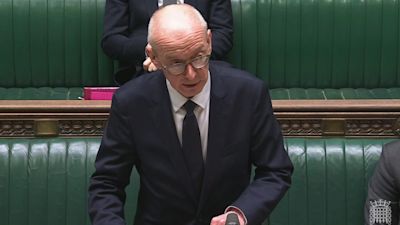
The government has apologised over women not being sent individual letters about changes to the state pension age, but said they would not be compensated. ITV News Political Correspondent Harry Horton reports
The government has reaffirmed its decision not to compensate women who were affected by the way changes to the state pension age were communicated.
Women Against State Pension Inequality (Waspi) has campaigned for support for women born in the 1950s, saying they did not receive sufficient warning of the state pension age for women being raised from 60 to 65, in line with men.
Those affected were initially told they would not receive state pension compensation in December 2024.
In November last year, Work and Pensions Secretary Pat McFadden said the government would reconsider this decision after the emergence of new “evidence” which his predecessor, Liz Kendall, was not shown.
But on Thursday, McFadden told the Commons: “The evidence shows that the vast majority of 1950s-born women already knew the state pension age was increasing thanks to a wide range of public information, including through leaflets, education campaigns, information in GP surgeries, on TV, radio, cinema and online.
“To specifically compensate only those women who suffered injustice would require a scheme that could reliably verify the individual circumstances of millions of women.”
McFadden apologised that women were not sent individual letters about changes to the state pension, but reiterated the government’s decision.
A Parliamentary and Health Service Ombudsman report has previously suggested compensation between £1,000 to nearly £3,000 could be suitable for those affected by how the changes were communicated.
Waspi chairwoman Angela Madden responded to the government’s decision, saying: “Ministers have demonstrated their utter contempt for 1950s-born women, for parliament and for the parliamentary ombudsman.
“The government has kicked the can down the road for months, only to arrive at exactly the same conclusion it has always wanted to.
“This is a disgraceful political choice by a small group of very powerful people, who have decided the harm and injustice suffered by millions of ordinary women simply does not matter.”
She insisted that Waspi will continue to fight for financial compensation.
Political opponents have also challenged the government’s decision.
Conservative Mark Garnier criticised the Labour government for turning on the Waspi women.
He said: “No wonder therefore that the Waspi women, who were promised so much, are so angry.
“The people who used to stand beside them have turned against them. If the government really believed that these women had faced a great injustice, they would have found a way to compensate them.”
Steve Darling, the Lib Dem’s work and pensions spokesman, said: “There are more than 3.6 million Waspi women across the UK who will feel this as if it were a punch in the stomach.
“They will feel utterly betrayed, and they will feel betrayed because false hope was given to them in the autumn, and so that hope has been dashed.”
Criticism has not just come from political opponents though.
Labour’s Rebecca Long Bailey said: “It is frankly wrong that the Government has once again chosen to reject compensation for the 1950s women affected by state pension age changes.”
In 1995, the government announced women’s state pension age would be increased in phases from 2010 over ten years.
Around 3.5 million women were affected by the changes.


