
Pierre Poilievre’s Explosive Revelations: Unmasking Liberal Corruption and Media Bias in a Dramatic Showdown with Rosemary Barton! The Fight for Canada’s Democracy Intensifies as Floor-Crossing Scandals Erupt, Shaking the Political Landscape to Its Core!

In a fiery televised confrontation, Pierre Poilievre unleashed a scathing indictment of Liberal Party corruption, exposing backroom floor-crossing deals orchestrated to secure a majority government. Veteran journalist Rosemary Barton visibly floundered, struggling to deflect Poilievre’s relentless accusations against Mark Carney and the Liberals’ underhanded tactics, shaking Canadian political landscape to its core.
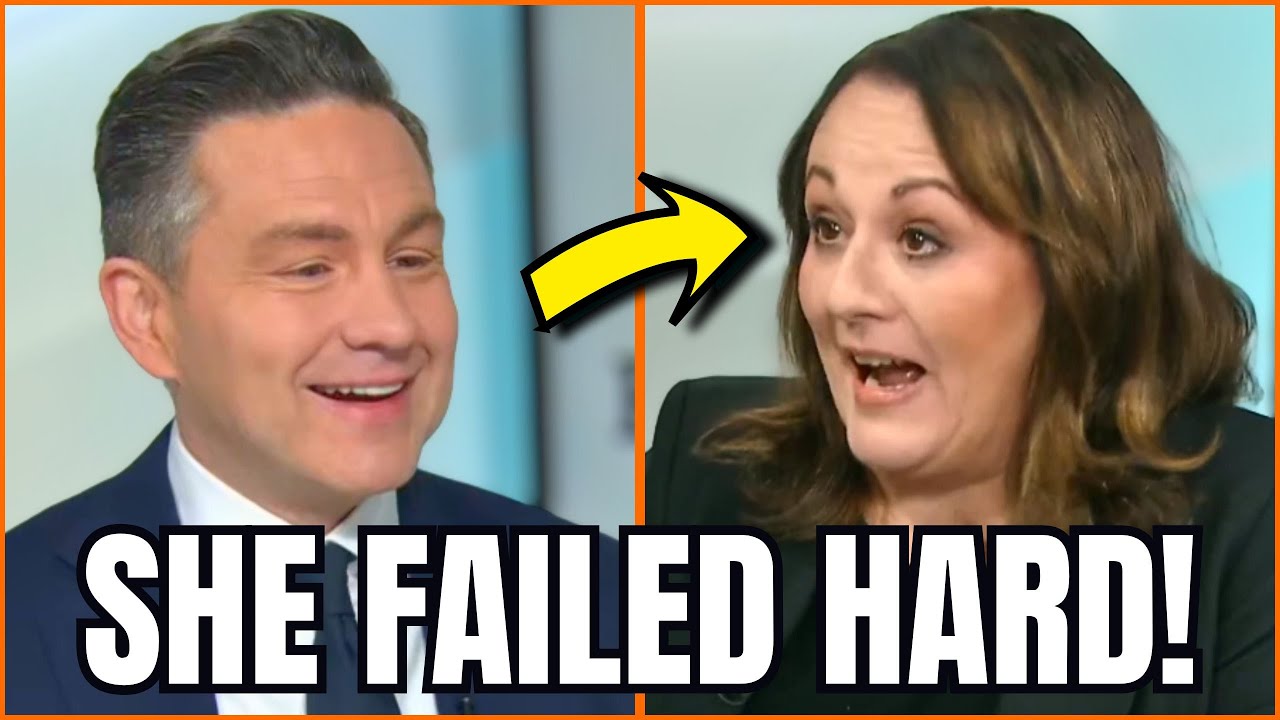 Poilievre began by condemning the blatant manipulation of democracy, accusing Mark Carney of bribing Conservative MPs to defect, thus artificially engineering a costly Liberal majority that Canadians rejected at the polls. This unprecedented strategy, Poilievre stressed, violates the spirit of Canadian politics and threatens democratic integrity.
Despite floor-crossing being technically legal, Poilievre emphasized the extraordinary nature of such a move, highlighting that in no prior Canadian history had a minority government been elevated to majority status purely through defections. This maneuver, he warned, undermines voters’ trust and manipulates parliamentary norms for partisan gain.
Barton, attempting to maintain control, repeatedly interrupted Poilievre’s assertions, pivoting the conversation to malign Conservative leadership. Her interruptions, however, only underscored the desperation of the Liberal media apparatus to silence Poilievre’s disruptive truth-telling during the tense exchange.
Poilievre leveraged the words of Michael Ma, a defector himself, to underscore the real economic impacts of Liberal governance: soaring inflation, skyrocketing grocery prices, and rampant food insecurity afflicting millions of Canadians dependent on food banks monthly. He accused the Liberals of ignoring these crises while enriching their political elites.
The interview delved into the corrosive policies driving costs higher, including Carney’s industrial carbon tax affecting farming equipment, fertilizer, and fuel—all critical to Canada’s food supply chain. Poilievre described these taxes as hidden levies burdening Canadian families silently and unjustly.
Barton’s attempts to justify these measures sparked accusations from Poilievre that the CBC was biased, actively censoring him when he discussed the reality of Liberal mismanagement. He criticized the network’s failure to investigate these backroom dealings with urgency and demanded journalistic accountability.
Touching on pipeline politics, Poilievre committed to pushing pipelines to the Pacific coast, condemning Carney’s contradictory positions evidenced by votes against project approvals. He pledged a Conservative government would prioritize natural resource development to strengthen Canada’s economy and sovereignty.

Barton awkwardly admitted that industrial carbon pricing was a deal-breaker for pipeline support, inadvertently confirming Poilievre’s accusations against the Liberals’ environmental policies. His calm but firm rebuttal highlighted the bitter tension between the need for economic growth and the Liberals’ regulatory overreach.
Trade relations with the United States were also addressed. Poilievre criticized the Liberals’ failed strategies, noting escalating tariffs and lost investments due to weak bargaining positions and lack of sovereignty in resource exports. He contrasted this with a bold Conservative plan to rebuild economic strength and restore Canada’s negotiating power.
Throughout the interview, Poilievre reflected on his motivation—anchored in empathy for struggling Canadians facing grocery aisle anxiety and impossible housing prices. His vision centers on hope and relief for everyday families, starkly contrasting with the current Liberal narrative of blame and deficit.
The confrontation 𝓮𝔁𝓹𝓸𝓼𝓮𝓭 deep fractures within Canadian politics, with Poilievre emerging as a resolute leader fighting against a corrupt system propped up by media bias and undercut by Liberal elites. His unwavering focus on affordability, transparency, and economic renewal resonated sharply amidst the chaos.
This explosive dialogue reminds Canadians of the growing distance between their hardships and the political gamesmanship unfolding in Ottawa. As floor crossings reshape parliamentary dynamics, voter trust is eroding, plunging the nation into unprecedented political uncertainty.
The fallout from this interview is immediate and undeniable: Liberal claims of legitimacy through defections are now tainted by accusations of bribery and manipulation. Poilievre’s bold exposure serves as a rallying cry for Canadians demanding political honesty and accountability.

Observers note that Rosemary Barton’s panicked responses and attempts to redirect the conversation only fueled suspicions of media complicity in protecting Liberal interests. This interview stands as a potent example of the intense combative landscape in modern Canadian political journalism.
As the nation watches, the question remains whether this scandalous floor-crossing and behind-the-scenes scheming will provoke meaningful reform or further entrench cynical political practices designed to bypass democratic mandates. The stakes for Canada’s future never felt higher.
Pierre Poilievre’s unfiltered confrontation is a clarion call to voters and watchdogs alike: democracy is under siege by covert deals and manipulated parliamentary majorities. Only through vigilance and decisive political action can Canadians reclaim their government.
This episode marks a turning point, exposing the lengths to which the Liberal Party will go to cling to power, and cementing Poilievre’s role as a fierce defender of democratic principles and champion of ordinary Canadians battling economic adversity.
In summary, the explosive interview laid bare a political crisis defined by corruption, fiscal irresponsibility, and media bias. With inflation and accessibility crises mounting, Poilievre’s urgent message demands immediate attention: Canada’s governance must be cleansed of these dark tactics.
Canadian voters are now faced with a stark choice—endorse a system rigged through clandestine deals or rally behind leadership that boldly confronts the corruption and prioritizes restoring integrity to parliament and economy alike.

The next chapters in Canadian politics will be shaped by this confrontation’s reverberations. Poilievre’s exposure invites scrutiny not only of Liberal tactics but also of journalistic standards, urging a reexamination of how power is wielded and reported in today’s turbulent political arena.
As the dust settles, one thing is certain: this dramatic showdown has thrust corruption and democratic legitimacy to the forefront of national debate, signaling a period of intense political upheaval and realignment.
For Canadians weary of economic hardship and political subterfuge, Poilievre’s candid critique offers a beacon of accountability. Whether this sparks a resurgence of democratic faith or deeper cynicism remains to be seen in the months ahead.
In the wake of these revelations, all eyes are on the political and media establishments to respond with transparency. The integrity of Canada’s democracy hinges on honest discourse and the courage to root out corruption wherever it festers.
With the 2025 elections looming, this breaking 𝒔𝒄𝒂𝓃𝒅𝒂𝓁 exposes the high stakes of political maneuvering and amplifies calls for a restored government truly reflective of Canadian values and resilient in the face of manipulation.
Pierre Poilievre’s resolute stand, juxtaposed with Rosemary Barton’s frantic attempts to deflect, underscores the escalating tension between truth-seeking and partisan protectionism dominating Canada’s political landscape today.
This unprecedented exposure demands swift public and institutional response. The Canadian people deserve clear answers, ethical governance, and leadership committed to ending the corrosive culture of corruption revealed in this explosive exchange.


